Tuesday, 23 November 2021

example exam question

 1. The devices used in 2010 are not multimedia devices but by the year 2016 the devices have under gone technological convergence and became portable devices e.g phones. The second interpretation is that the devices such as tablets have become more widely used as their number has increased consistently over the years.  Y  Y you dont always have to talk about dramatic changes.

3. One reason is the the population has been brought up with the technology so they are more and more dependent on it therefore the younger generations will be using it more often then the older generations who may struggle to use the technology. A second reason may be that the availability of multimedia devices have increased meaning that the younger generations are more likely to use a portable multimedia device. There are more devices in circulation meaning that the chance of people using the devices will increase. Y use VODS video on demand called digital natives Y  key terminology convergence 

4. The difference between readership and circulation is that the circulation is how many people may be able to read and readership is how many people actively buy the product. N SWITCH THEM!!

WWW: Got the jist of all of the questions.

EBI: Dont mix up READERSHIP and CIRULATION!!

Thursday, 18 November 2021

LO3: Genre Theory

The main genre is action adventure.

These common elements are common characteristics and tropes associated with a particular genre.Barry Keith Grant 1995 all genres have sub genres.

  • Example 1 the scene where they are driving through the glass scene this has both the sub romance genre and the main action adventure genre. The scene does this by using the clever switching of shots. From a shot that is inside the building to driving out through the window and switching to romance using the actors gestures and eye contact to make the shot romantic. This shows both genres and creates the mixed feelings of happiness a romance as well as action an excitement in the audience. 


  • A second example of the main genre of the film (action adventure). This is when the heroic protagonist overcomes the Antagonist at the end of the film.

Patrick Phillips (1996) genre offers Comfortable Reassurance (examples of how a product is predictable).
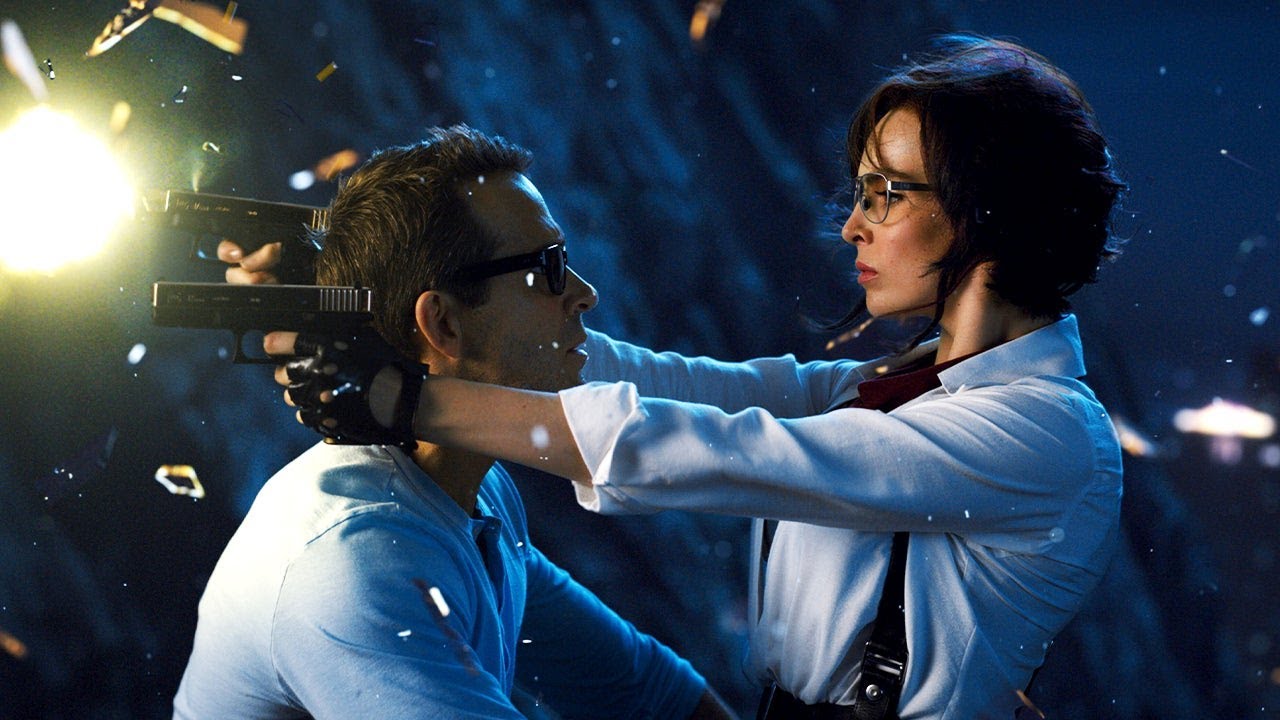
In the film Free Guy the film uses mise on scene to create comfortable reassurance several pop culture references from other games such as rainbow cars from GTA V and also cosmetics and skins from other games


Ransom and stafford 1999 helps to minimise risk and predict expenditure (how much money they need to make the film). makes it easier to market and sell products. Jodie Comer Ryan Reynolds.


Rick Altman's 1999 genre, offers pleasure 
Emotional pleasure: happy sad nostalgic.
Visceral Pleasures: gut responses excitement fear laughter ect.
Intellectual Puzzles: makes the audience think.

David Bordwell (1989): what themes are in the product what is the film about

Thursday, 11 November 2021

LO3 representation

Definition: How the media shows us things about society - but this is through careful moderation.

PEOPLE AND PLACES


Tim O’Sullivan Et Al (1998) : For representations to work, there has to be a shared recognition of people and places. All representations therefore have ideologies behind them. Ideology refers to set of ideas which produces a partial and selective view of reality. Representations are based on ideologies. Ideology means belief systems in society. Good always prevails. Mise On Scene.

Links to Free guy at the end the gesture is when the Heroic Protagonist "guy" jumps through a wall and disappears out of shot and the incidental music then slowly the music fades in and we see the character has crossed the barrier. This is an enigma because it signifies the Heroic Protagonist has beaten the Antagonist and this connotes a sense of relief as the audience is relived and joyful for the character because they know that the Heroic Protagonist has won.

Richard Dyer (1983) : audiences should question the representations they see in media texts discusses how representations are stereotypical or challenged in media. 


Free Guy examples: The main Heroic protagonist at the start of Free Guy is a female presented as strong and powerful. This challenges the traditional female stereotypes in films. The heroic protagonist has lots of action scenes where she is fighting and the camera presents her as being strong and powerful by using tracking shots in fighting scenes as well as using high angle camera shots. She is challenging traditional female stereotypes.


Another Example that breaks traditional stereotypes is near the end of the movie when the sidekick to the main character has a moment where he faces his fear and sacrifices himself for the main character this is an enigma and breaks the traditional stereotypes because it shows a ethnically diverse character becoming powerful and overcoming their fears. This breaks the the traditional stereotypes.


Laura Mulvey (1975) : Women are objectified in the media this is called the male gaze.

Challenged Male Gaze example:


In this scene the female is overs equalised in the scene, she is presented as a stripper and is wearing revealing clothes as part of her costume. This agrees with the theory because the film has over sexualised a female and is therefore trying to use the male gaze.


A scene from this film where this stereotype is broken is when Jodie Comer is presented as strong and powerful throughout the fight scenes in the movie, her character also agrees with the male gaze as her costume dennotes the male gaze as she wears over sexualised costumes in the game world, but when she is in the real world she wears normal clothes that are not oversexualised so this agrees with the theory. This creates a feel of desire in specifically men in the audience because Jodie is presented as being the ideal partner. Although she will make the audience feel powerful specifically the female audience because who is also presented as a strong powerful character throughout the movie.


Clothes in the game world


Normal clothes not in the game world


Stuart Hall (1995), Alvarado (1987) :


Earp and Katz: (1999) : Men are often represented as violent Pathological control (a need to be in control)

Antwan breaking servers and also the scene between Guy and Dude near the end of the movie.


In the Movie Free Guy there is several scenes where this theory is both true and false. For example one of the scenes where this is true is when the antagonist is destroying the server with an axe the gestures of  this character are aggressive and threatening. The character has also throughout the course of the film been rude deceitful and dismissive. This scene shows his desire to be in power is so strong that he is destroying everything that he created namely the game. Although this agrees with the theory he does have some strong motives that have lead him to destroying the servers. During the scene there is a lot of sound and special effects, this amplifies the danger to the audience and makes them feel scared and frightened, it is a spectacle. The sound effects are realistic and loud to simulate what the audience would hear if they were trying to break the servers themselves

LO3 Sound

Digetic - sounds coming from diegesis storyworld. Verisimilitude appear realistic. The dialogue in this scenes creates verisimilitude. Heard by the characters and the audience. Dialogue that helps reflect/establish a character type. Reflects the enigma has heroic antagonist or a princess. 2 examples. significant dialogue. Sound effects. 2 examples. Diegetic Voiceover we hear their thoughts.


Voice Over Adds a layer of depth to the film,
usually has the thoughts of the main character.


Dialogue Allows the character to speak and show
emotion, usually connote fear or happiness depending
on the scene.
                                                                                                                                                    
Dialogue shows the characters fear in the scene
connotes fear and emotion in the audience 


Non Digetic - sounds that have been added in post production. A sting a single sound sounds sinister. start of an action scene. Connotes tension anticipation. Incidental music. Based on the tempo the pitch and the pace of the music depends on what it creates. Matches the action. Sense of urgency and a lot of tension. 2 examples.    


Sting gives the scene suspense and can signify an
enigma connotes suspense. 


Incidental This leads up to a thing and connotes fear
and suspense
Sound Effects this is the sound effect of a car
hitting the main character. This lets the audience 
understand what is going on in the scene.
Sound effect of the main character being
punched connotes suspense and denotes suffering.

Incidental

LO3 Editing

These are Continuity Editing Techniques.

Each editing technique will include at least 2 shots. Not usually visible to the audience. "Cuts or cutting is a change of shot". Help us to understand the narrative.

Shot Reverse Shot Structure - An editing technique widely used in dialogue sequences and sequences in which characters exchange looks. SRSS. is used in conversations between 2 characters. Heroic Progtangonist talking to Antagonist. Connotes suspense/enigma. hero in high angle and the the protagonist in a low angle shot to connote power in the scene. Connotes dominance and subordinance. Audience will fell empathetic. Binary opposition 2 opposing forces. JUXSTAPOSITION between the SRSS shot types e.g high angle and low angle. Creates binary opposition. Creating teamwork. 2 examples.

SSRS connotes sad emotion with the audience


SSRS
SSRS


Action Match - Cutting on action or matching on action refers to film editing and video editing techniques where the editor cuts from one shot to another view that matches the first shot's action. A common example is a man walking up to a door and reaching for the knob. Look out for in action scenes making the action more of a spectacle. One action over at least 2 plus shots. 1 example.

Connotes fear and action in the scene

Shows the character reacting to the events
in the storyworld. connotes fear and suspense


Cross Cutting - Cross-cutting is an editing technique most often used in films to establish action occurring at the same time, and usually in the same place. In a cross-cut, the camera will cut away from one action to another action. Gives the impression that action is happening at the same time. Sense of meanwhile in 2 different locations. Shows teamwork. Commons connotations are teamwork e.g James Bond HQ. 1 example

Builds suspense and excitement in the audiencen
leading up to an enigma.

Shows the game world changing connotes
suspense


Switching to the real world. Creating suspense
for the audience

Insert Shot - Any shot whose only objective is to draw the viewer's attention to a single aspect inside a scene. Focuses the audiences attention on a specific prop that is important to the narrative. Involving 2 shots. e.g Simon is walking down the street with his phone in his hand the prop is then seen in a close up. 1 example

Shows the object creating suspense and connotes 
hope in the audience
Creates Suspense and connotes action and danger

Shows the character before the enigma. This
builds up suspense and hope


Eye Line Match - Eyeline match is a film editing technique to indicate to the audience what a character is seeingCutting to what he is seeing. Includes 2 shots. Cut in-between on character, long shot cut to a close up shot. which included a cut form a wide/long shot of Simon looking of screen to a close up of an apple. this connotes to the audience that Simon is hungry, this also creates empathy in the audience. 1 example.

Focuses on the item giving it importance in
the scene

Action Connotes fear and danger


Thursday, 4 November 2021

LO3: Camerawork fr Q6,7 or 8

SHOT TYPES


1. Close up are used to connote importance and emotion if it is on a face. Empathy from an audience.

2. Crowd shot has more than 3 main characters involved. Connotations of teamwork band of heroic protagonists. They will prevail. 

3. Long Shot/Wide Shot good for action scenes and locations great at showing good vs evil. Other Connotations Spectacle Large Event.

4. Establishing Shot establishing the location good at creating Verisimilitude (act of appearing realistic) so the audience so that it is relatable.

5. Mid Shot 

6. Extreme Close Up connotes empathy and emotion.

7. Medium Close Up good at showing empathy and emotion. Antagonist promotes evilness serious facial expression. affect on audience is fear.

8. Duo Shot Wearing same costumes

9. Extreme Long Shot

Camera Angles:

High Angle: looking down Underdog characters suburdonate prince princess character. Antagonist. imposing powerful dominant.

Low Angle: Looking up powerful dominant strong victorious fear intimidation Showing dominance.

Dutch Angle/CantedAngle. This is where the camera is tilted significantly tilted to the left or right. Slightly off center enigma of the scene. 

Movement:

Panning the camera moves left to right right to left very common at the start of a new location/setting establishing shot for a new scene allows the audience to understand the environment. Creates suspense. Start of conflict. Spectacle

Tilting movement of the camera up and down common for the start of scenes and location as well as characters. Shows power or powerless.

Tracking movement is when the camera follows the character next to them for scenes of enigmas. Suspense. Involving the audience in the action. Spectacle. Exciting. Action.


Wide shot: shows of the landscape and introduces the shot this connotes mystery and a welcome feeling. In this shot the camera is showing the surroundings of where the film starts this allows the audience to immerse themselves in the storyworld which the film is set in.


Medium Close Up: This is used so that we can see the characters expression in the shot. This connotes how the character is feeling and show us what the character is like as a person at the start of the movie or during the shot. In this shot wee see the heroic protagonist getting up and the shot allows us to see the Heroic Protagonist expression.


Tracking shot: tracks the main character as they move across the scene. This shows us that the character is taking in his surroundings and is unsure of what is happening around him. This connotes a sense of bewilderment and surprise. It also lets the audience look around and see the wold which the scene is taking place in.


Close up: A close up shot of the character allows the audience and the camera to focus on a particular character facial expressions and this allows the audience to connect with the character and feel the characters emotions. In this shot the heroic protagonist is talking to his best friend as there is about to be an enigma. Where the Heroic Protagonist is making a turning point in the movie.


Low angle: this is where the camera is pointing up at at the main character to show their dominance and importance in the scene. Usually used to show the main character as strong and powerful. This lets the audience have that feel good moment and they know that the heroic protagonist is going to win.


Pan: this is used to show off the surroundings of an area so that the audience can see and understand the environment that they are looking at. This allows the audience to feel like they are somehow included in the film. This lets the audience immersive themselves in the film and helps the entertainment factor of the film.


Tracking: this is when the camera tracks a character to show off their surroundings to the audience. This is usually used for action chase scenes or transitions where the character is moving from one scene to the other in this scene this allows the audience to be able to immersive themselves in the film.


High Angle: this is used to show someone is weak in a film because the camera is pointed down at them meaning that they appear small and not powerful. This is usually used when the bad guy is beaten by the good guy and dies at the end of a movie. In this scene out heroic protagonist is fighting the antagonist the high angle of the camera shows our Heroic Protagonist as powerful and showing dominance. While our Antagonist is showed as being not powerful and weak.

0


Final exam notes

 LO1 - industry and media ownership, conglomerates and independent companies. Subsidiaries Vertical integration and horizontal integration. ...